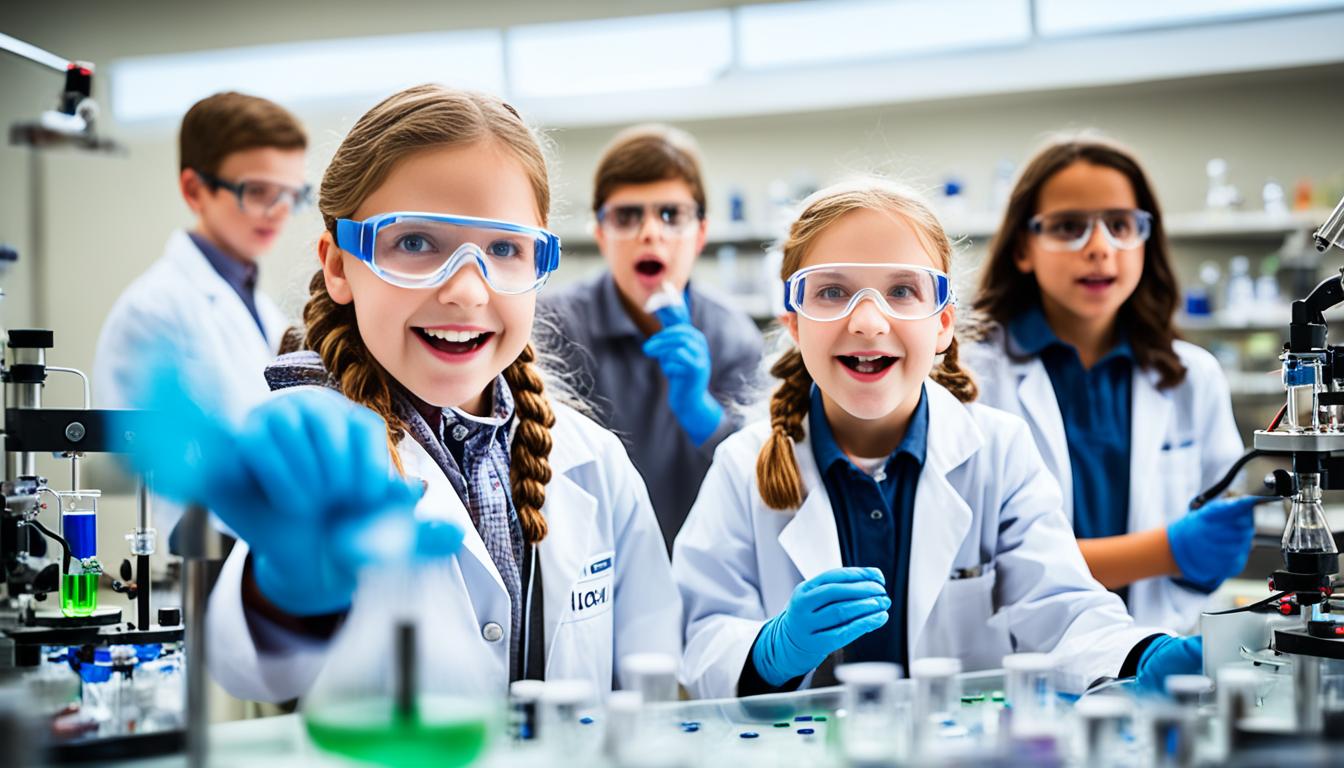
In today’s fast-changing world, science education is key. It helps students get ready for the future challenges and chances. By teaching critical thinking, problem-solving, and understanding the natural world, it gives learners the skills they need.
These skills help them succeed in many careers, drive new ideas, and be informed, responsible citizens.
The need for people with strong STEM skills is growing worldwide. Science education builds these skills and encourages curiosity, awareness of the environment, and a love for research. It makes students appreciate the world more and prepares them to solve complex problems.
Science education uses hands-on experiments and analytical thinking. It teaches students to think critically, solve problems, and adapt to new situations. This way, it prepares them for the changing job market of the 21st century.
It also connects theory with practice, making sure students are ready for their future careers. This approach helps build a society based on knowledge, where people can make informed decisions.
Fostering Critical Thinking Skills
Science education is key to building critical thinking skills. It teaches students to solve problems step by step, analyze data, and make conclusions based on evidence. This way, they learn to face challenges with a logical and analytical mind.
Through experiments and inquiry-based learning, students improve their problem-solving skills. They also get better at analyzing things deeply.
Problem-Solving Techniques
The scientific method is a big part of science education. It teaches students how to solve problems in a structured way. They learn to make hypotheses, design experiments, and understand results.
These skills are crucial for STEM fields and many careers. So, learning science is a smart move for the future.
Analytical Reasoning Development
Science education helps students think deeply and question things. They learn to look at data, find patterns, and make smart choices. This helps them solve complex problems.
This way, they’re ready for a changing world. Being able to think critically and solve problems is key.
Preparing for Future Careers
The job market is always changing, making science education key for future careers. More people are needed in science, technology, engineering, and mathematics (STEM) fields. This is because technology is advancing fast and we need new solutions for big global problems.
High-Demand STEM Fields
STEM careers include exciting areas like computer science and renewable energy. Students learn important skills in these fields. They can make a big difference in the world.
Science education helps students and the community. As technology grows, we’ll need more STEM experts. This leads to more innovation and economic growth. By training students for these careers, we keep our nation leading in innovation and competitiveness.
Science: Driving Innovation
Science education is key to boosting creativity and problem-solving skills. It teaches students the scientific method and discovery process. This helps them think creatively and be open to new ideas.
Science education helps develop analytical and critical thinking skills. These skills have led to many technological advances and scientific discoveries. They’ve changed our world for the better.
Science education and innovation are closely linked. Students learn through experiments, research, and teamwork. This way, they learn to solve problems with a scientific mindset.
They gain a deep understanding of scientific theories and principles. This empowers them to find innovative solutions to complex issues. It opens up new possibilities.
Advances in science and technology come from science education. It has led to breakthroughs in medicine and technology. Science education’s impact on progress is clear.

Science education builds a strong foundation for future innovators. It teaches critical and creative thinking. These skills are vital for solving 21st-century challenges.
As we face future challenges, science education will be crucial. It will help drive scientific and technological progress. This will shape our future together.
Promoting Scientific Literacy
Science education is key to getting people to understand and use scientific ideas in daily life. It helps students learn about the world, how things work, and how to think critically. This way, they can make smart choices, question scientific claims, and help solve big problems.
Understanding the World Around Us
Learning science is vital for a society that knows and values science. When people get science, they can see how the world works, from the human body to the environment. This knowledge lets them talk about important topics, make good decisions, and help solve big issues.
By teaching scientific literacy, we give students the skills to check facts, question scientific claims, and solve problems. This improves their choices in life and gets them ready for STEM careers. Their knowledge and critical thinking are very important there.
Nurturing Curiosity and Exploration
Science education sparks a lifelong love for learning and discovery. It grows scientific curiosity and offers hands-on experiments. This lets students dive into the natural world’s wonders.
Through inquiry-based education, students learn by asking questions and designing experiments. They uncover the secrets of our universe. This way, they learn by doing.
This method improves students’ understanding of science and boosts critical-thinking and problem-solving skills. Students learn to analyze data and apply their knowledge to real life. This approach makes them curious about science, inspiring them to be innovators and problem-solvers.
Science education builds a future where people can solve complex problems and advance science and technology. It prepares students for STEM careers and gives them skills for a changing world.
Building a Knowledge-Based Society
Science education is key to building a society that values knowledge. It gives people the skills to think critically and innovate. This education helps bridge the gap between what we learn in school and how we can use it to solve real problems.
Bridging the Gap Between Theory and Practice
By combining science, technology, engineering, and mathematics (STEM) in schools, we create a well-rounded learning experience. This mix prepares students to apply their knowledge in different situations. It prepares them for a world that changes fast because of technology.
Science education shows students how their studies are useful and can make a difference. It teaches them to see the value in what they learn.

The link between theory and practice is crucial in a knowledge-based society. Through practical projects, students learn more about science and how to solve complex problems. This approach prepares a workforce that can turn scientific knowledge into new solutions. It helps move society forward.
Enhancing Problem-Solving Abilities
Science education is key in teaching students how to solve problems. It teaches them the scientific method. This method includes collecting data, analyzing it, and making decisions based on evidence.
This way, students learn to think critically and solve problems. They become better at making decisions and tackling challenges.
Real-World Application of Scientific Methods
Science education makes students apply scientific methods to real situations. By learning to solve problems using critical thinking and scientific methods, they see how STEM skills are useful outside class. This hands-on learning improves their problem-solving abilities and shows them how science can solve big issues.
Through real-world problems, students learn to handle uncertainty, think outside the box, and make decisions based on evidence. This helps them deal with complex issues in their lives or future STEM careers. Adding real-world application to science education makes students into active problem-solvers and change-makers.
Fostering Environmental Awareness
Science education is key to teaching us about the environment and how to care for it. By learning about ecology and climate science, students get to know how our actions affect the planet. This knowledge helps them make better choices and support efforts to protect nature.
Ecological science shows how living things and their surroundings are connected. Students learn about the balance in nature, why different species matter, and how our actions harm the environment. This helps them see how their choices affect the planet.
Learning about sustainability is also important. Students discover how to use resources wisely and support green energy. They learn about the circular economy, which helps the planet. This knowledge lets them live and work in ways that are good for the earth.
Science education makes the next generation ready to make a difference. With the right knowledge and skills, they can tackle big environmental issues. They’ll lead the way to a better, healthier future for our planet.
Developing Research and Inquiry Skills
Science education is key in teaching students how to research and inquire. These skills are vital for many careers and studies. Through experiments, collecting data, and using the scientific method, students learn to make hypotheses, design studies, and analyze data.
These skills help students solve complex problems, think deeply, and advance human knowledge. By exploring science, students learn the importance of making decisions based on data. They see the value of using evidence to support their conclusions.
Science education makes students curious and excited about the world. It teaches them to ask questions and explore the natural world. This way of learning prepares them for the 21st-century job market. In today’s world, being able to understand, interpret, and apply scientific knowledge is crucial in many fields.